2024 / 2025 Bergmannkiez-Gemeinschaftsschule, Nostitzstrasse 10961 Berlin, Germany
PHOTOS / ARTWORK: © Eva Susanne Schmidhuber, VG Bildkunst, 2024



















MATERIAL
mural: engraved drawing, recycled gold leaf 24 kt| plant sculpture: charcrete as CO2 storage | short films (scroll down for english version)
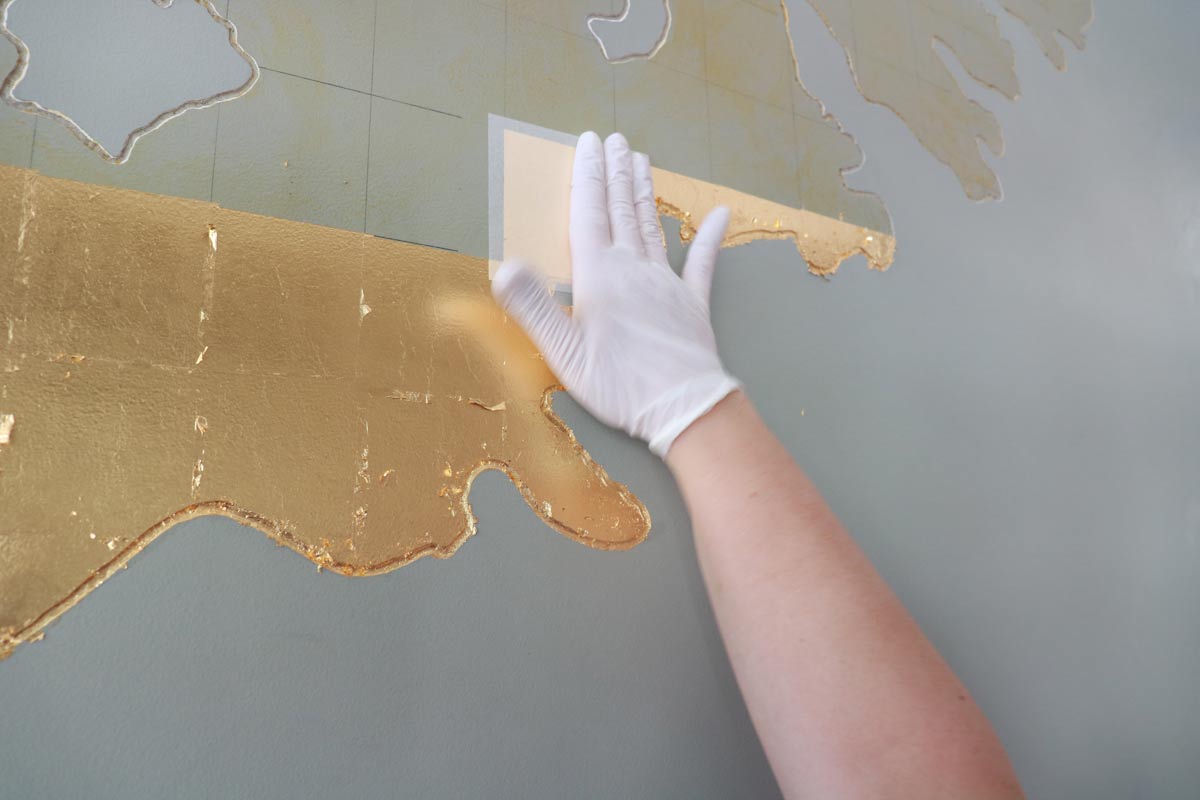
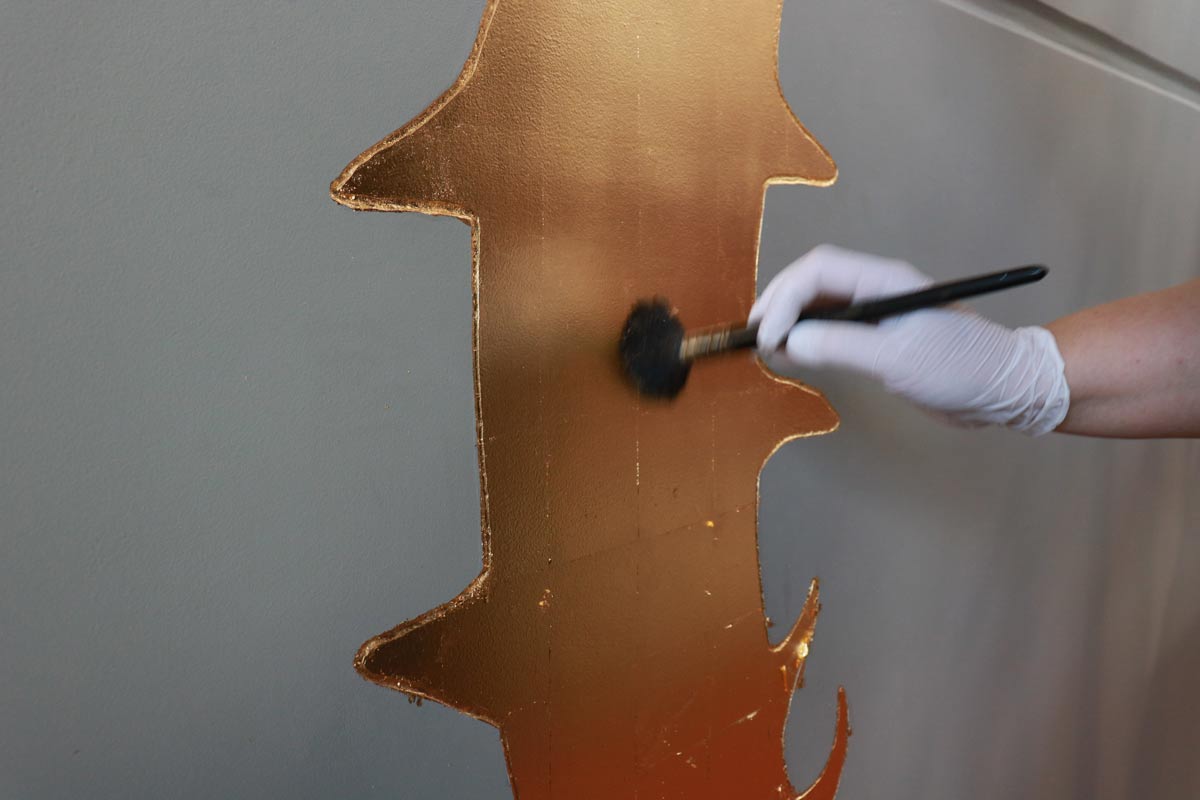
Wandarbeit: Gravierte Zeichnung, nachhaltig hergestelltes Blattgold 24 kt
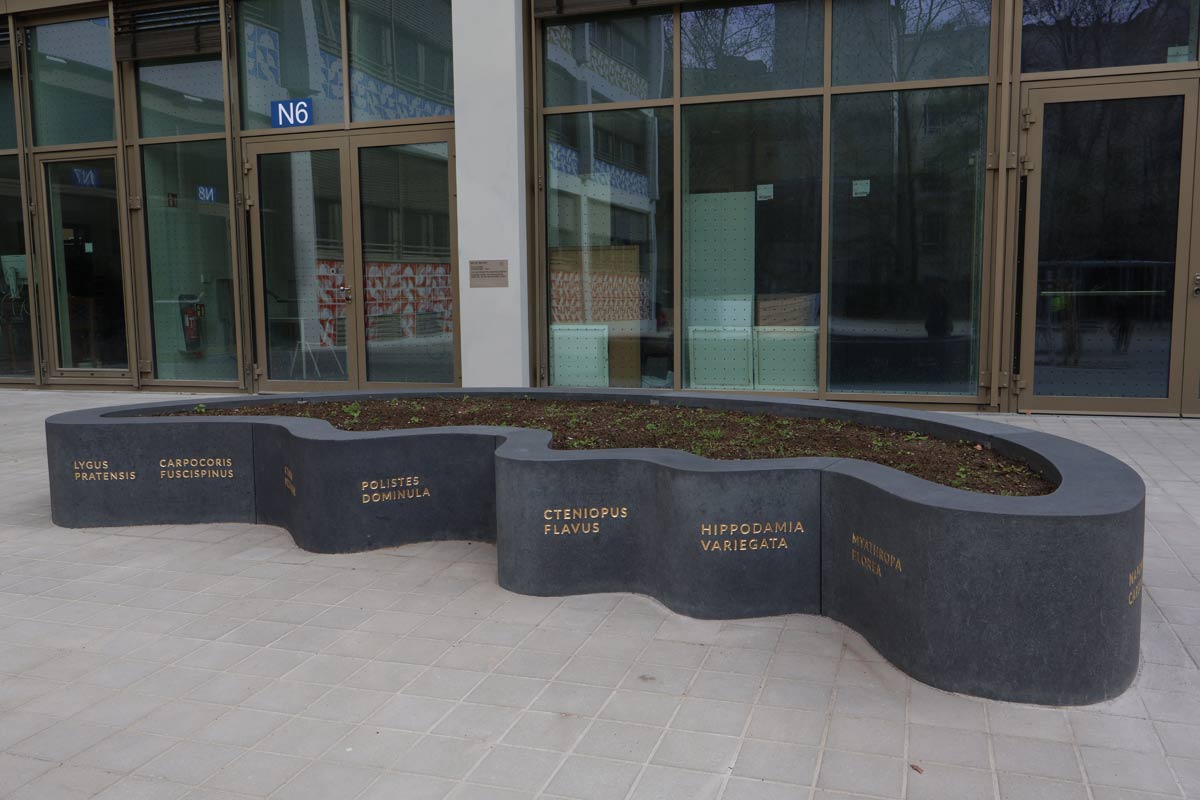
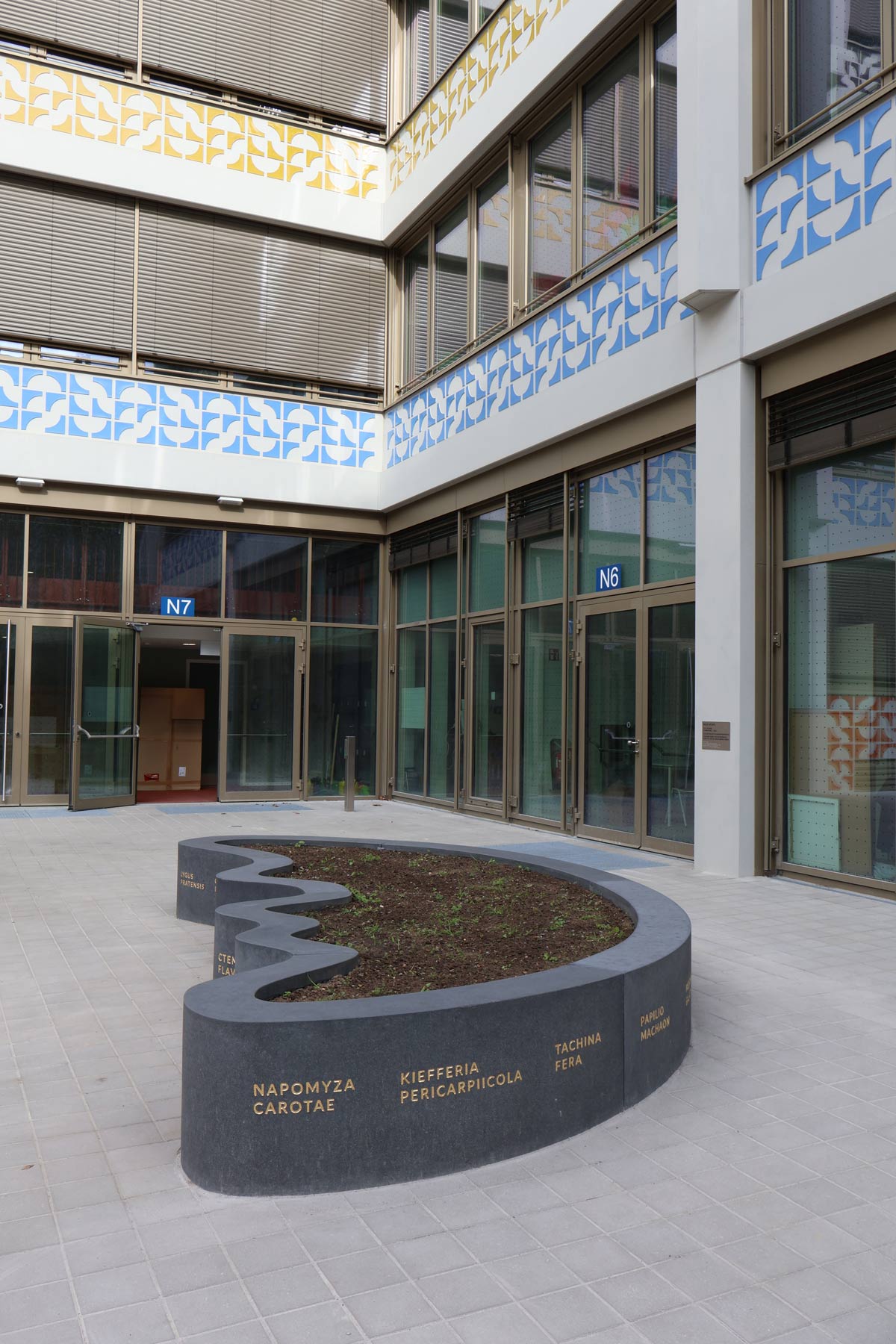
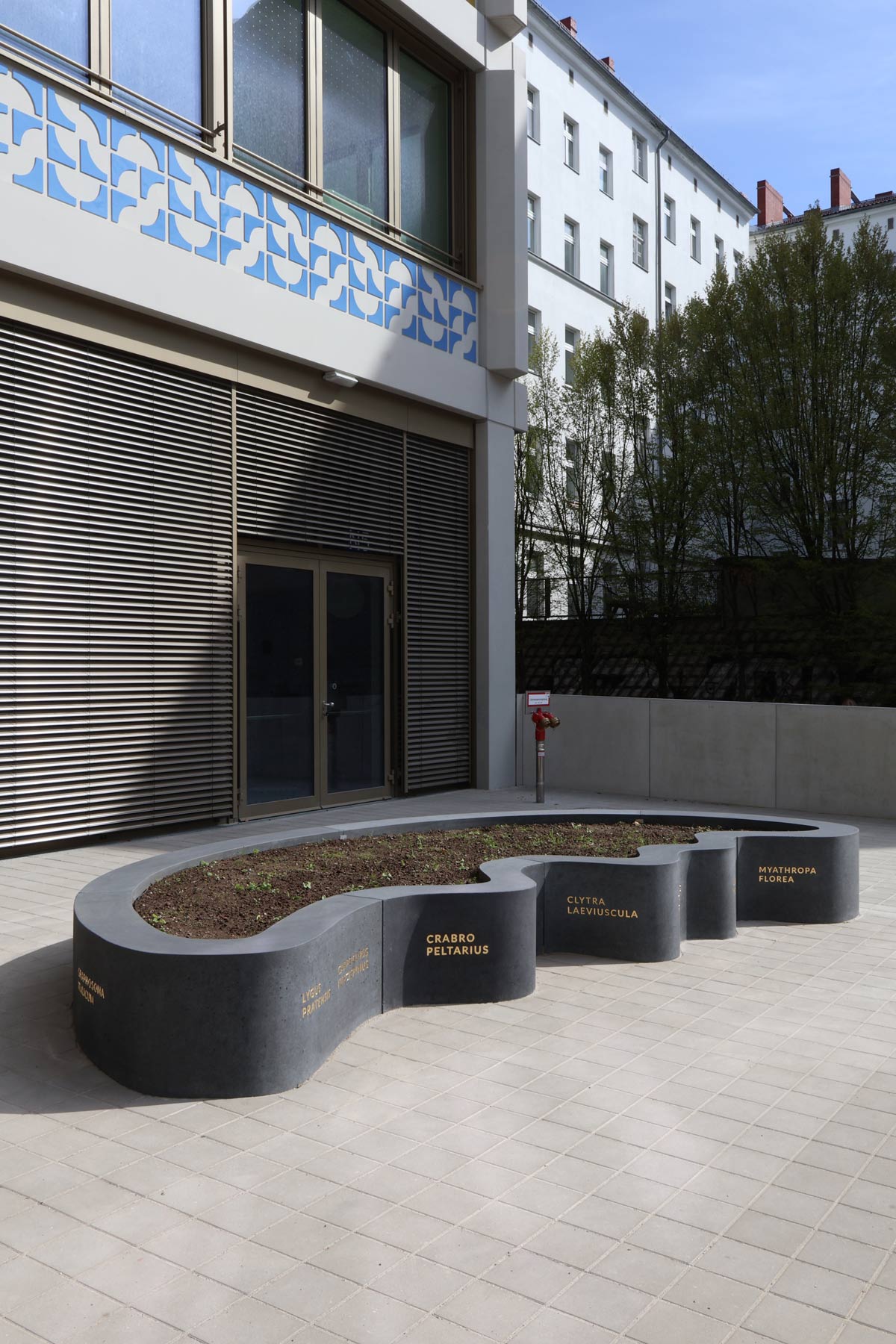
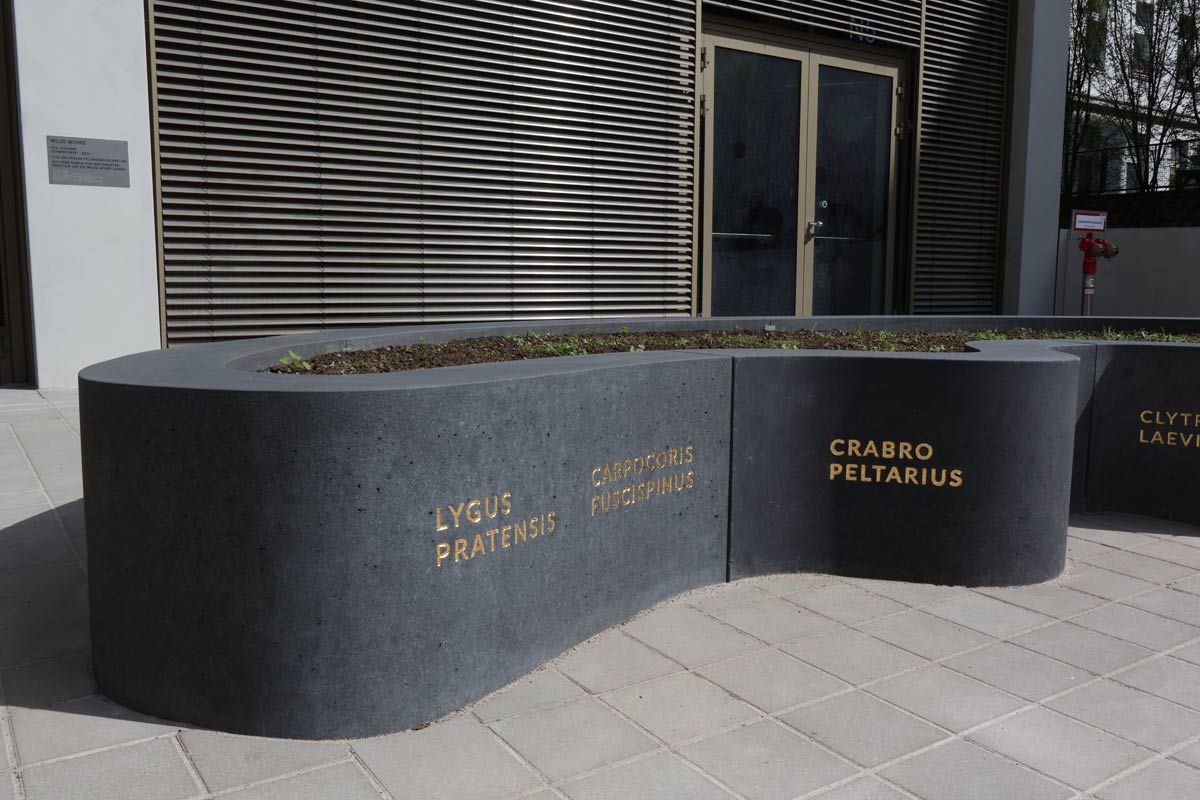
Beet-Skulptur: Pflanzenkohlebeton als CO2-Speicher, Gravierte goldene Namen gefährdeter Insekten, die die Wilde Möhre als Nahrungsquelle haben.
Partizipation: Kurzfilme und künstlerische Spiele zur Wilden Möhre
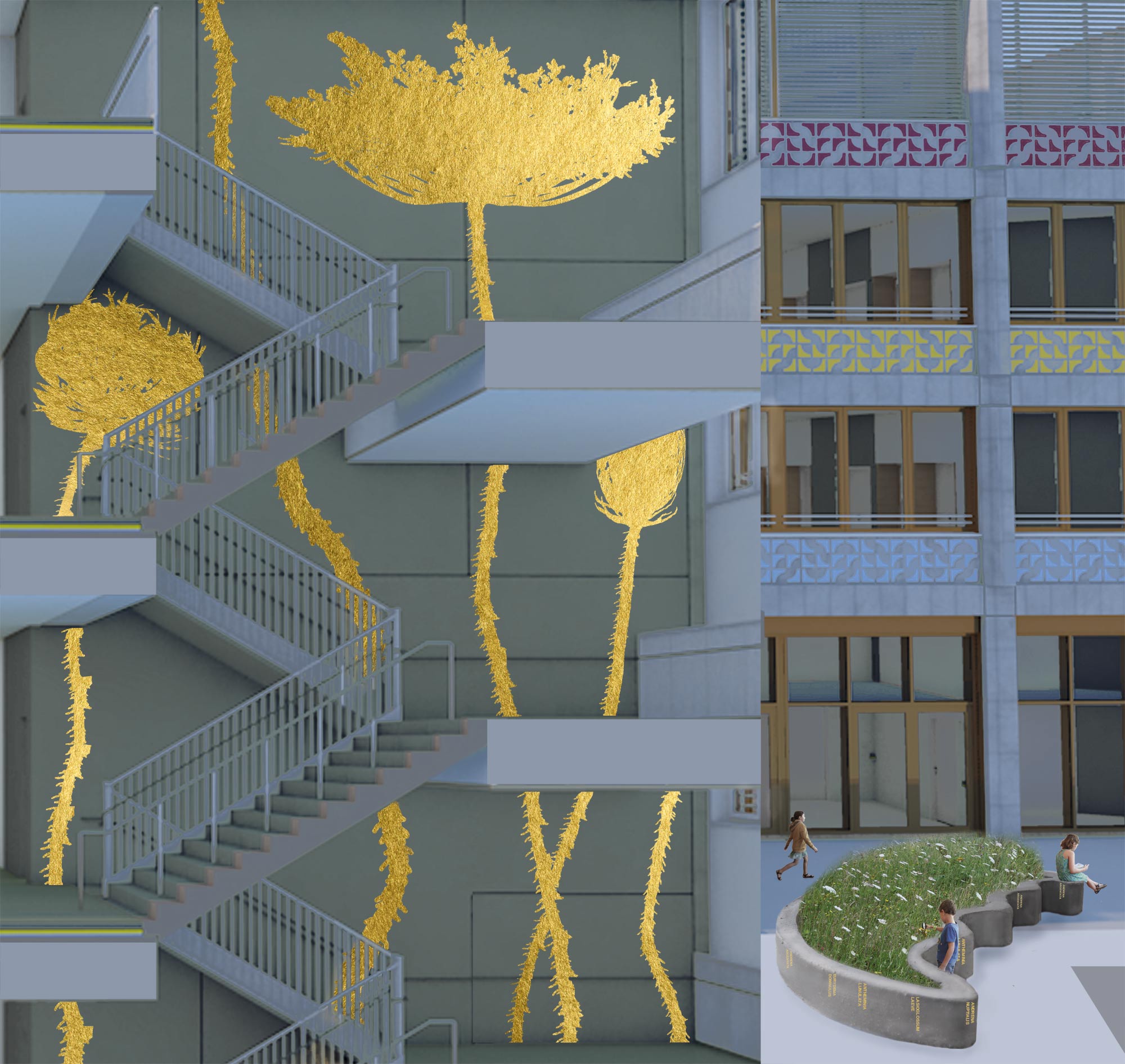
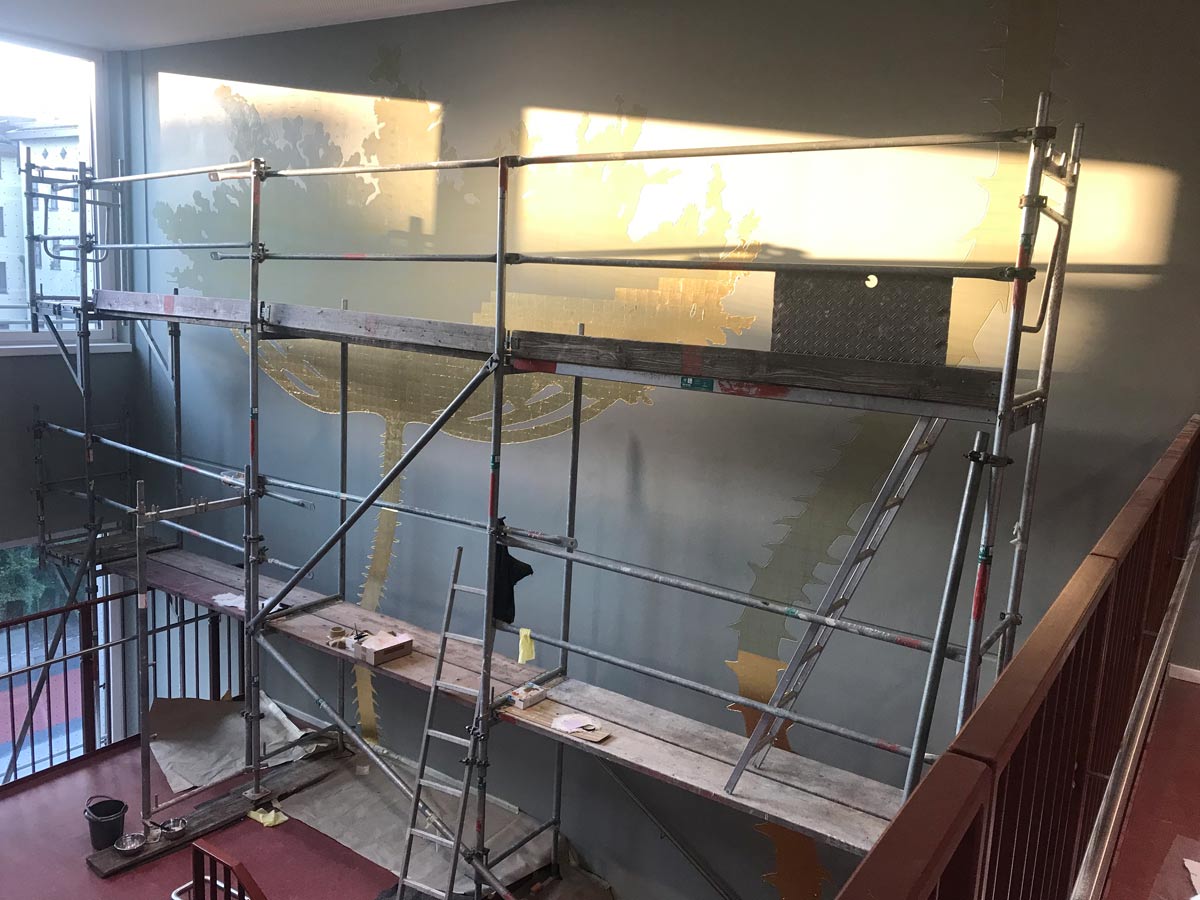
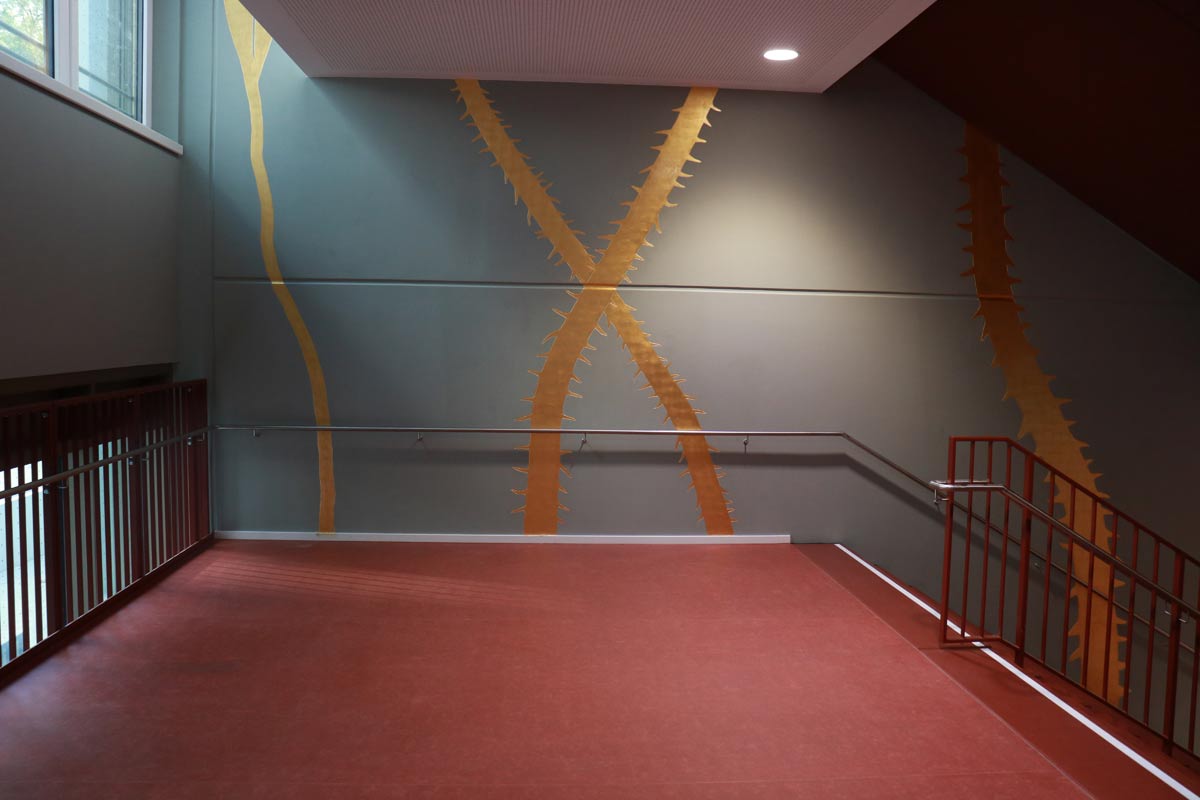
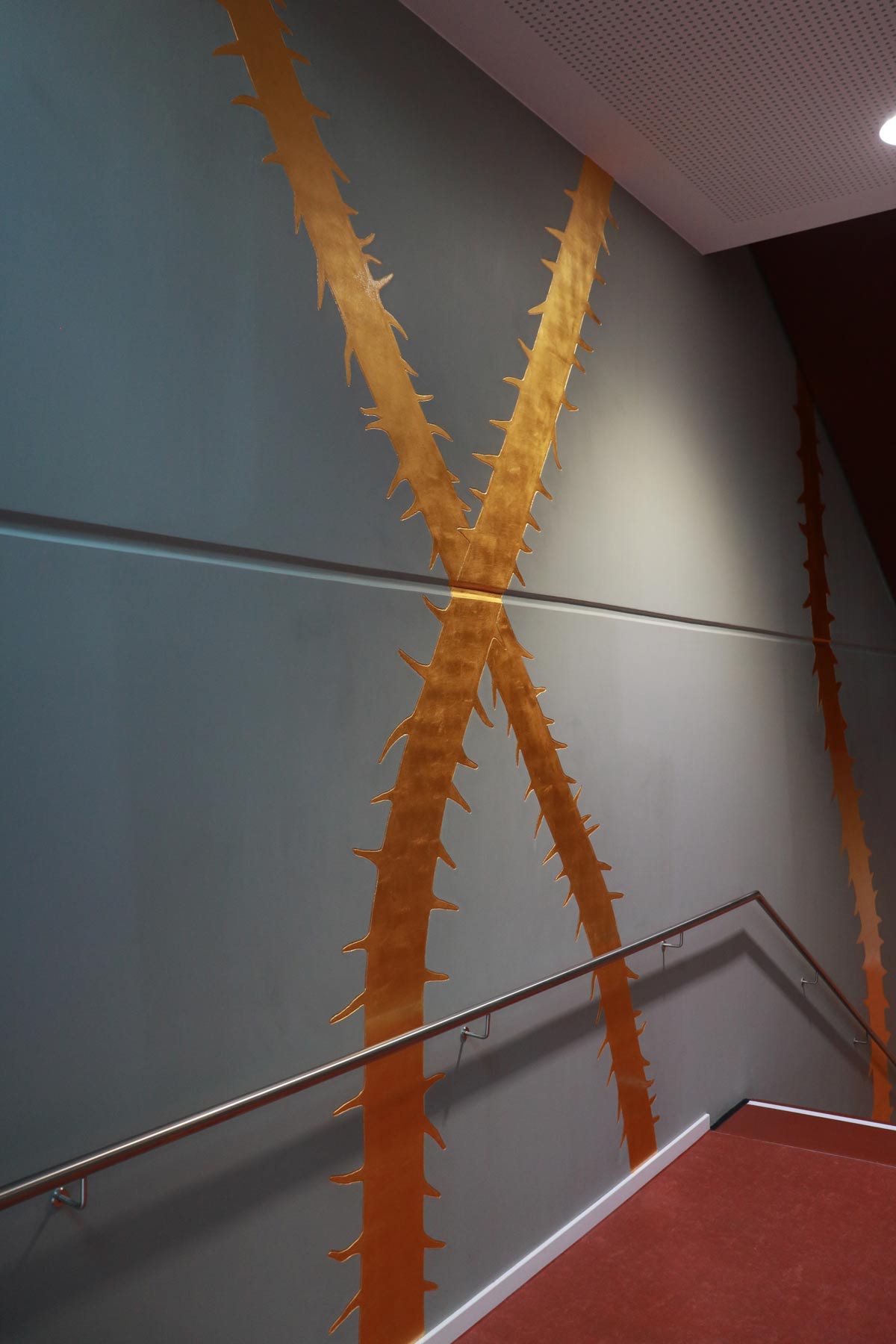
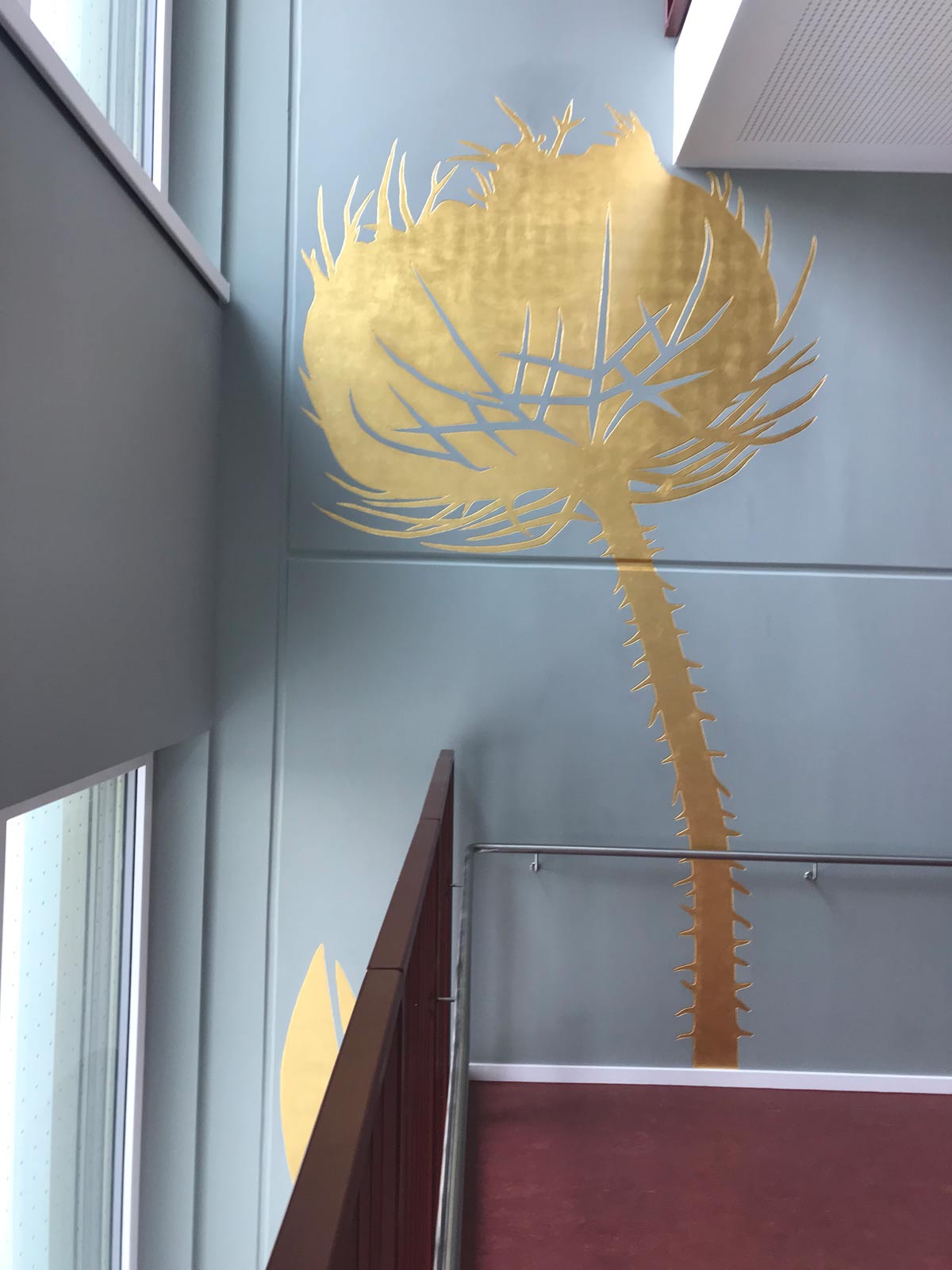
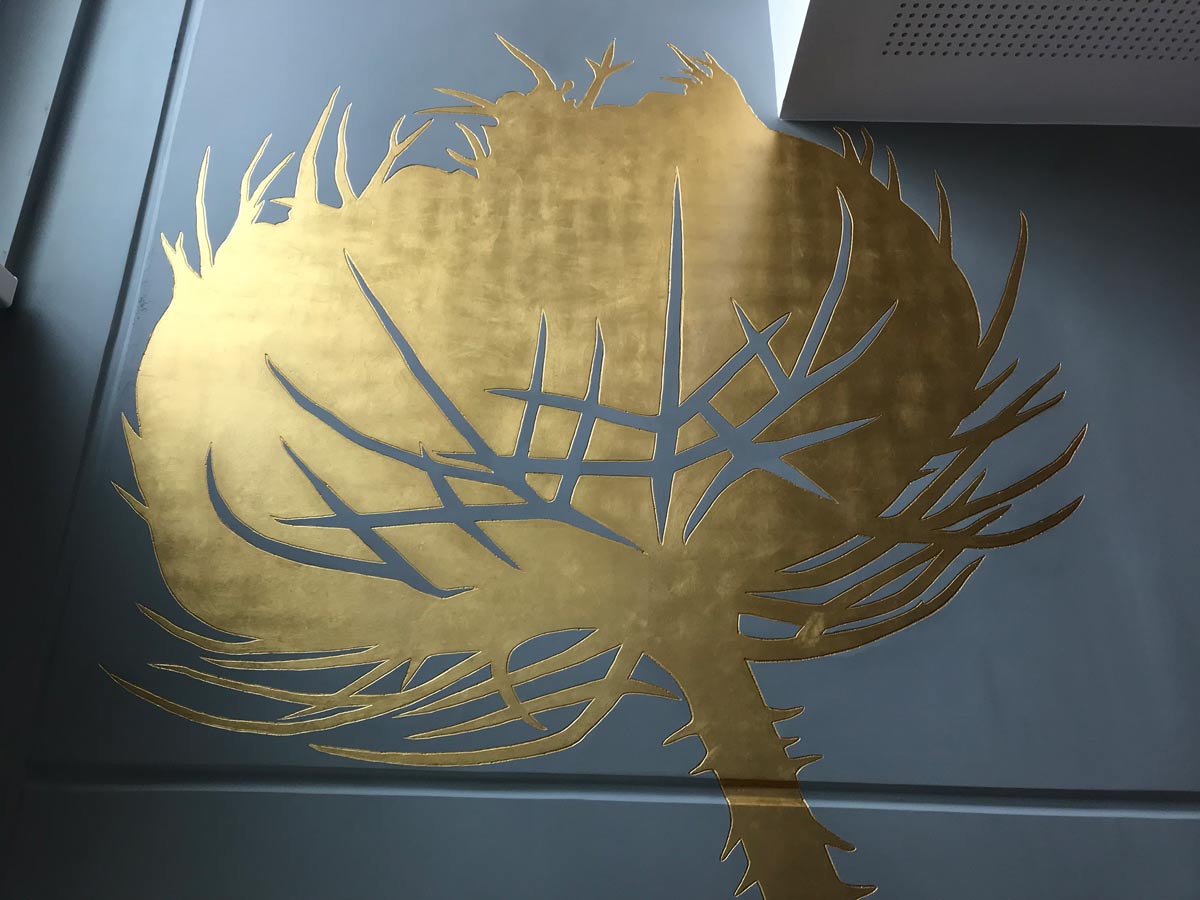
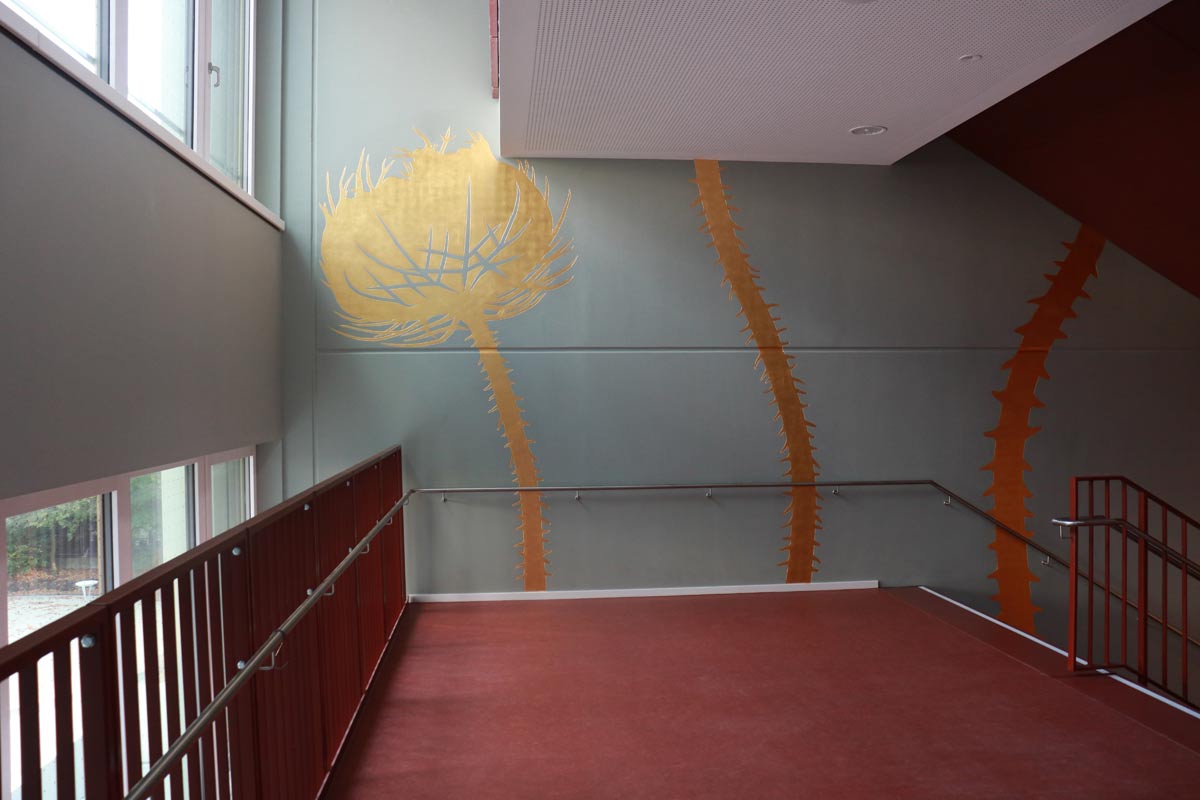
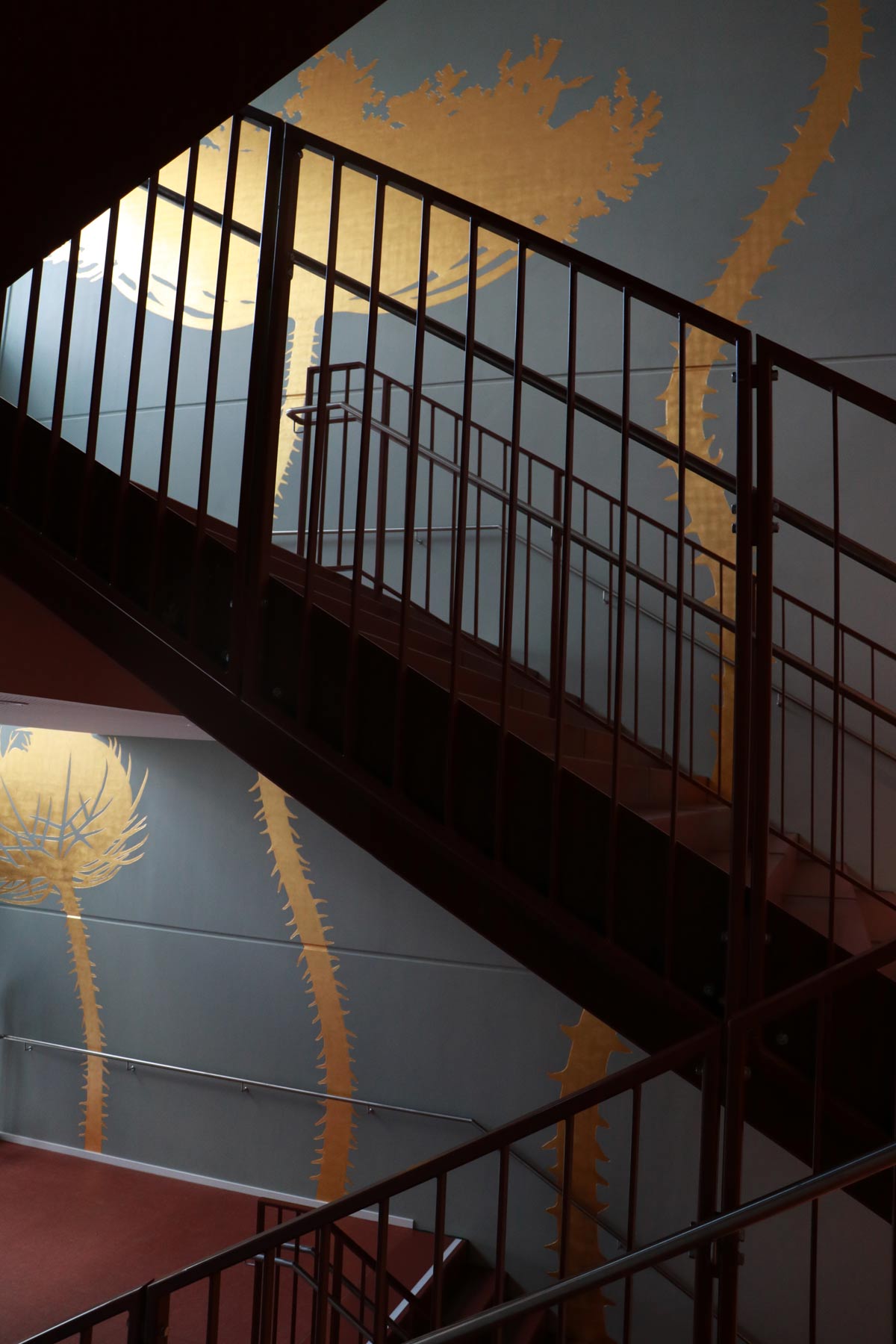
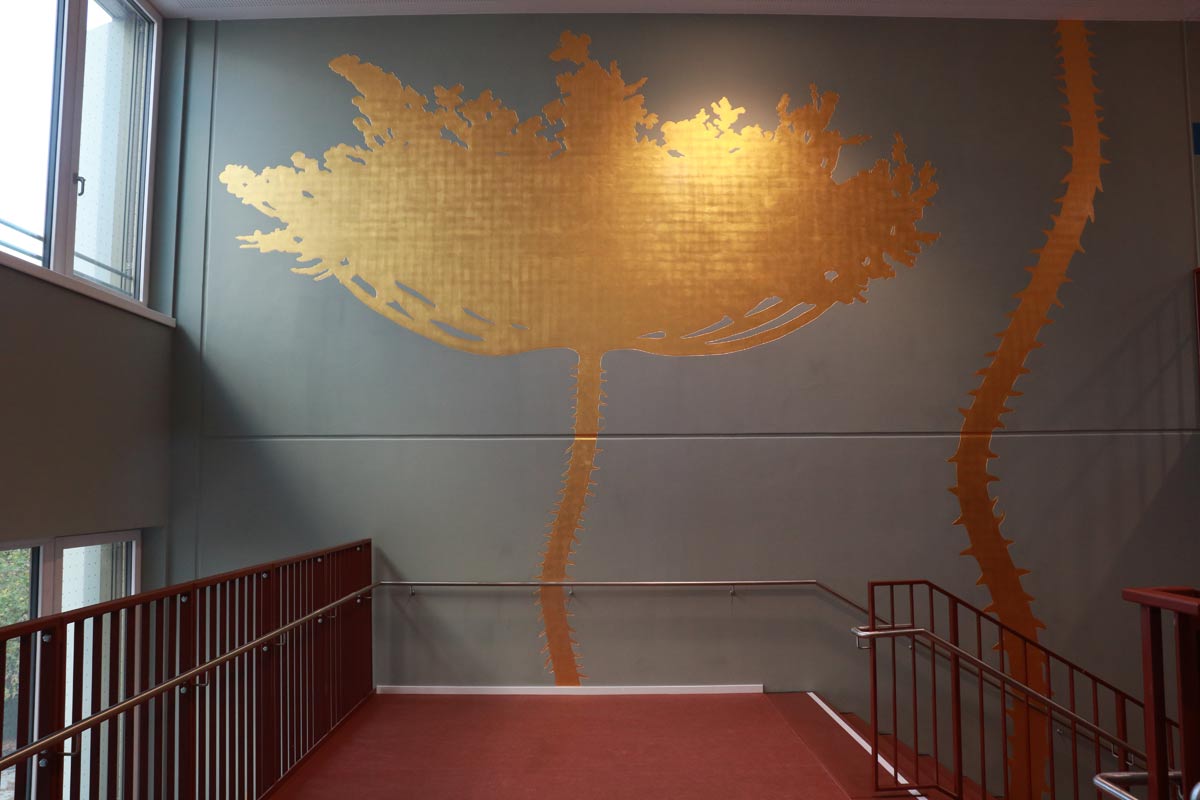
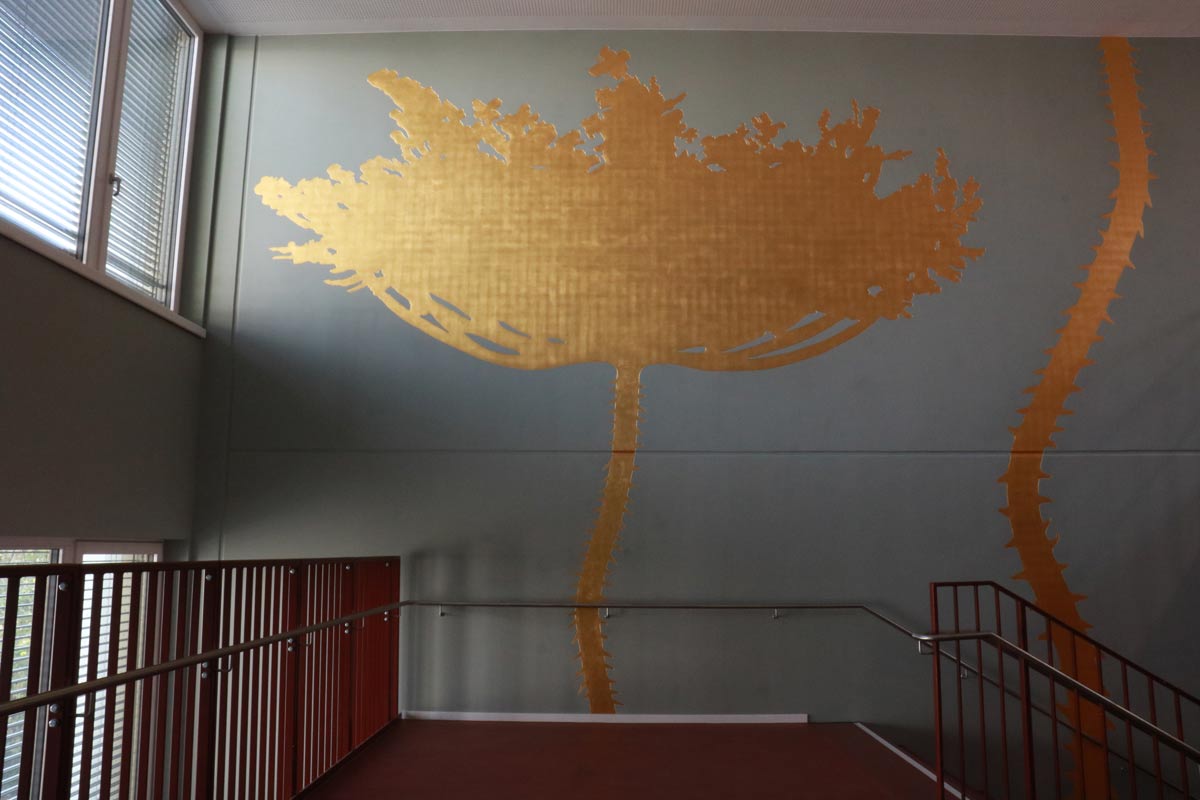
Die künstlerische Arbeit symbolisiert die Kostbarkeit der Artenvielfalt und das Umweltprofil der Bergmannkiez-Gemeinschaftsschule. Wilde Möhren wachsen in einer Beet-Skulptur, in Kurzfilmen der Schüler*innen und als Wandarbeit im Treppenhaus.
Erläuterung zum Kunstwerk Wilde Möhre (download pdf)
Wildes Möhren Menü (download pdf)
Gestalte deine eigene Kunstführung (download pdf)
Kartenspiel: Wildes Möhren Quiz (zum ausdrucken, download pdf )
Spiele das Wilde Möhren Quiz (Link Kahoot)
Wilde Möhre – DAUCUS CAROTA
Die Beet-Skulptur verweist auf den Trick der Wilden Möhre, die mit einer dunklen Blüte ein Insekt vortäuscht und anlockt. Finde dein magisches Tier im Kunstwerk. Diese Insekten lieben die Wilde Möhre:
Unterstützung der Auswahl der Insektennamen durch den NABU – Naturschutzbund Deutschland e. V.
Team Wandarbeit: Marc-Antoine Carcéréri, Anne Lou Schröter, Vergolderwerkstatt: Anja Isensee, Anja Idehen, Mina Tempa
Beet-Skulptur: Bio-Betonteile von BNB Potsdam, Einbau: Rüdiger Brandenburg
Auslobung: Land Berlin, Bezirksamt Friedrichshain-Kreuzberg von Berlin
Bauherrin: Senatsverwaltung für Stadtentwicklung, Bauen und Wohnen
Pressemitteilung des Bezirks Friedrichshain-Kreuzberg vom 06.11.2024
Pressemitteilung des Bezirks zur Ausstellung 22.11.2023 (download pdf)
Einladung zur Entwurfsausstellung (download pdf)
english version
The artistic work refers to the environmental profile of the Bergmannkiez Community School: The design title Wilde Möhre refers to the wild plant that can be found on Berlin wastelands, cemeteries and roadsides. The wild carrot is the mother of the carrot and is an example of a forgotten vegetable that grows in the city. It is loved by endangered insects and is also delicious for humans.
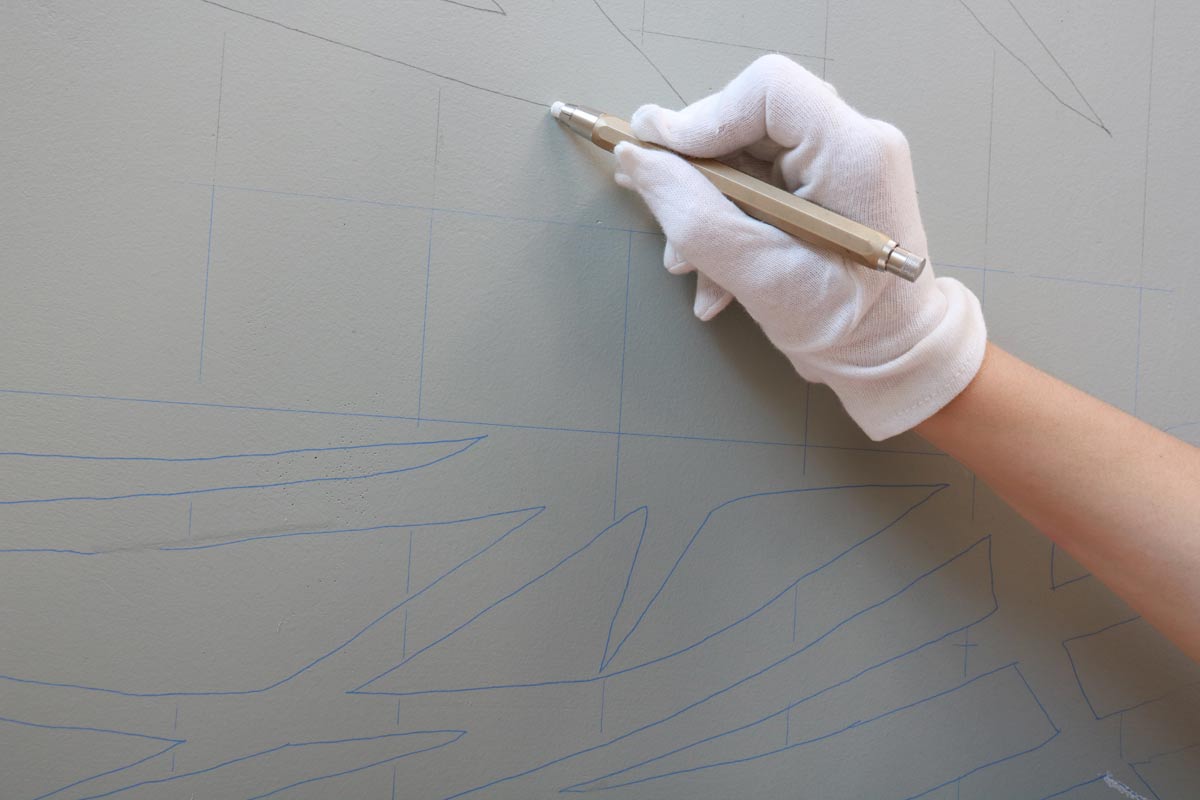
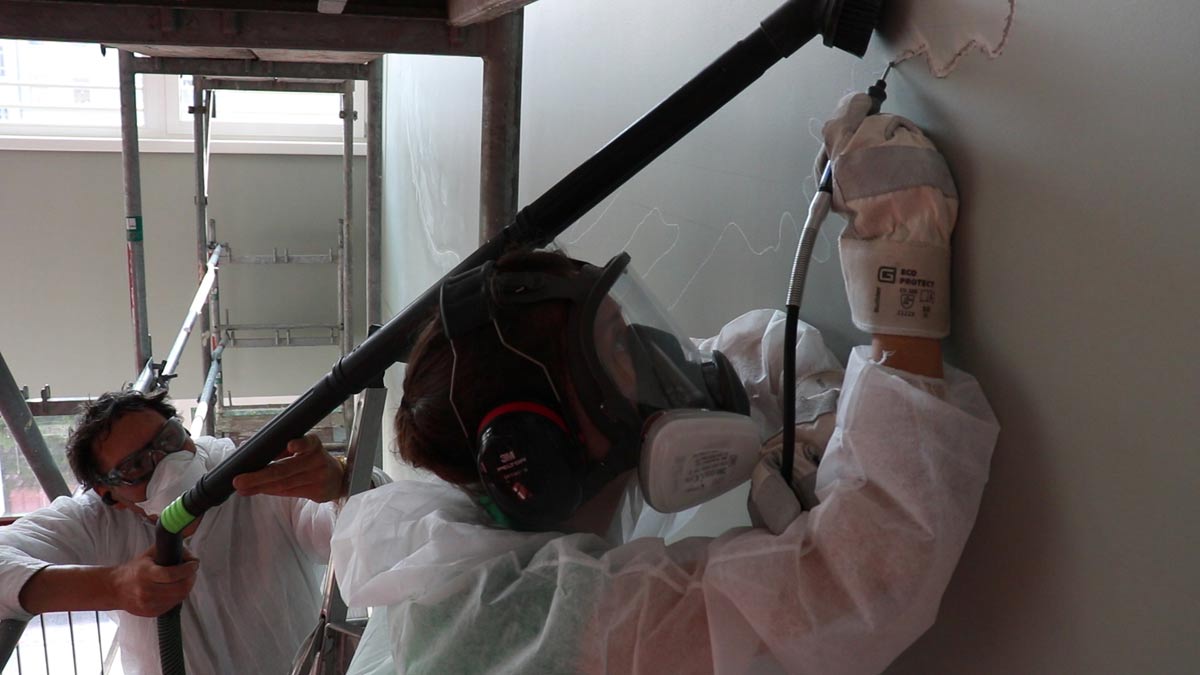
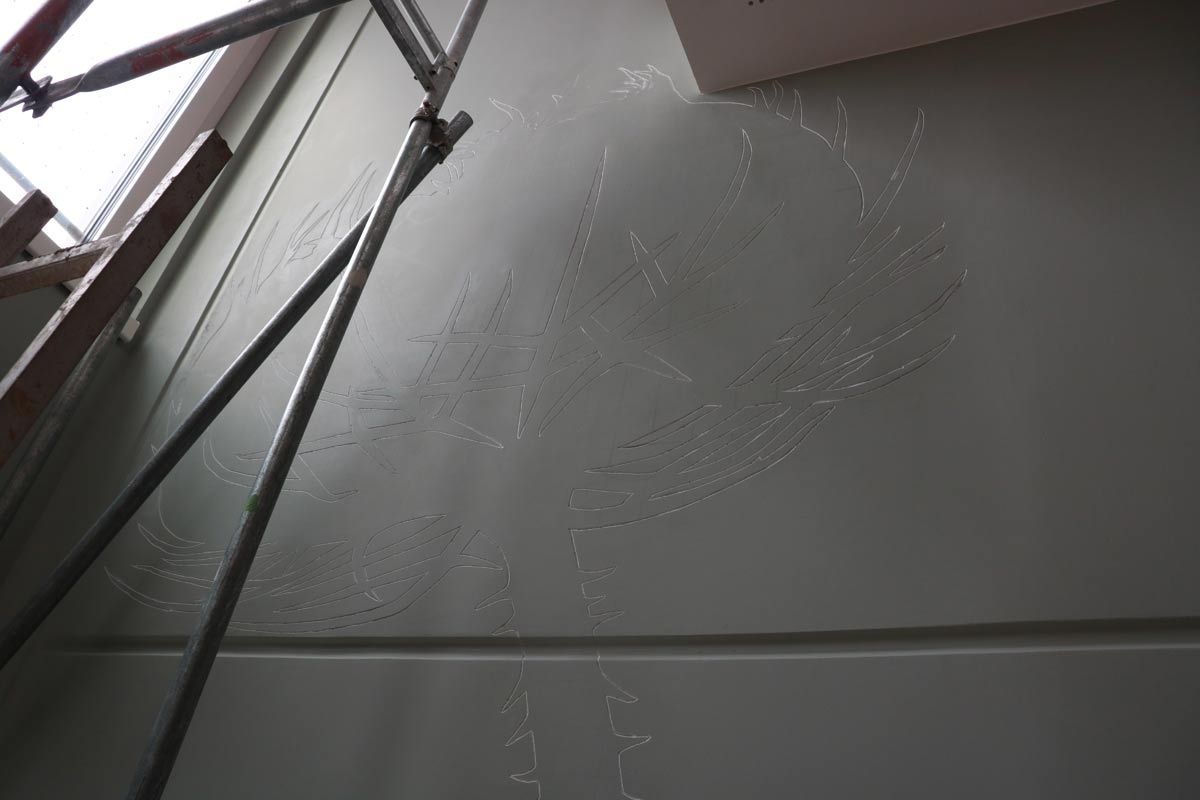
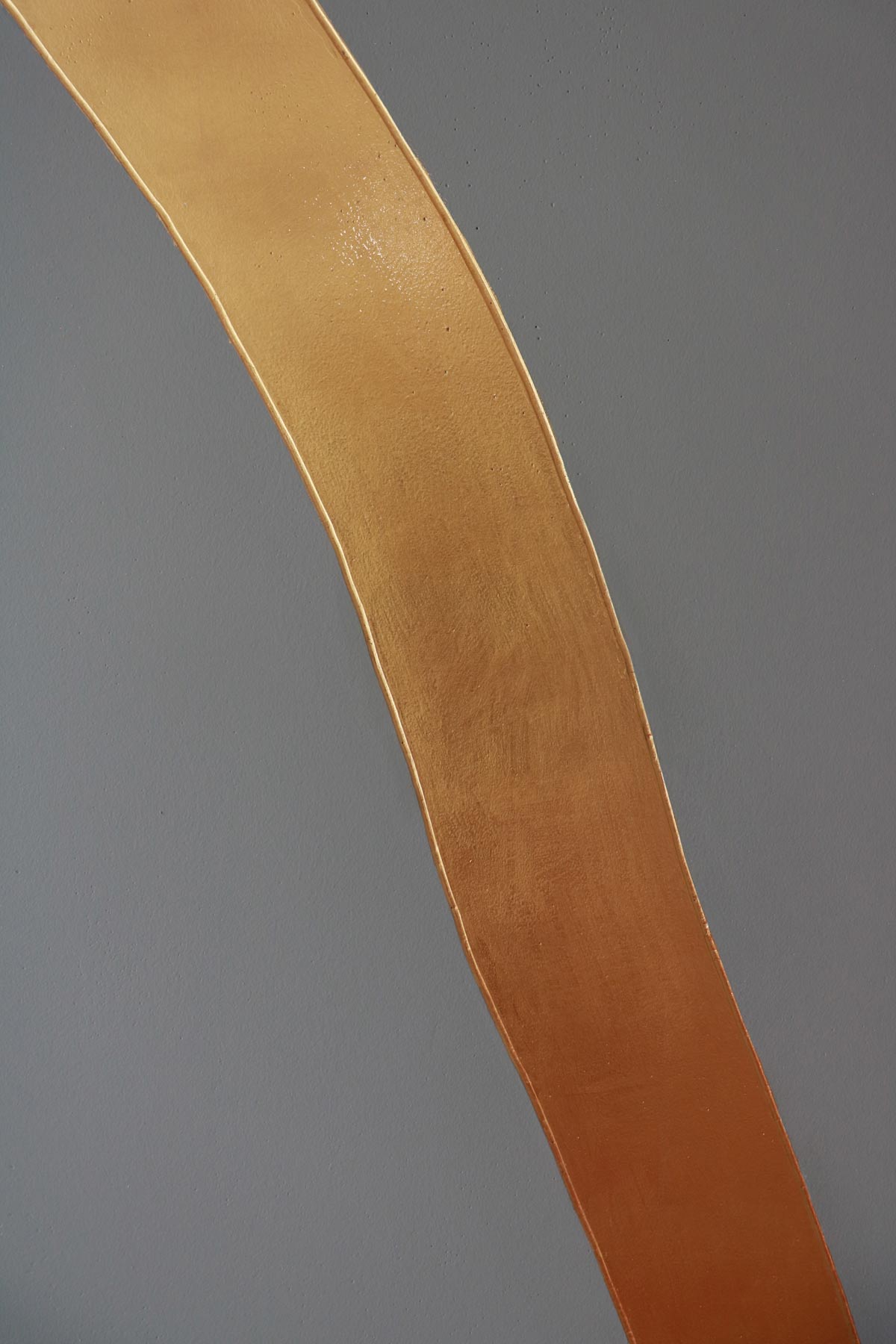
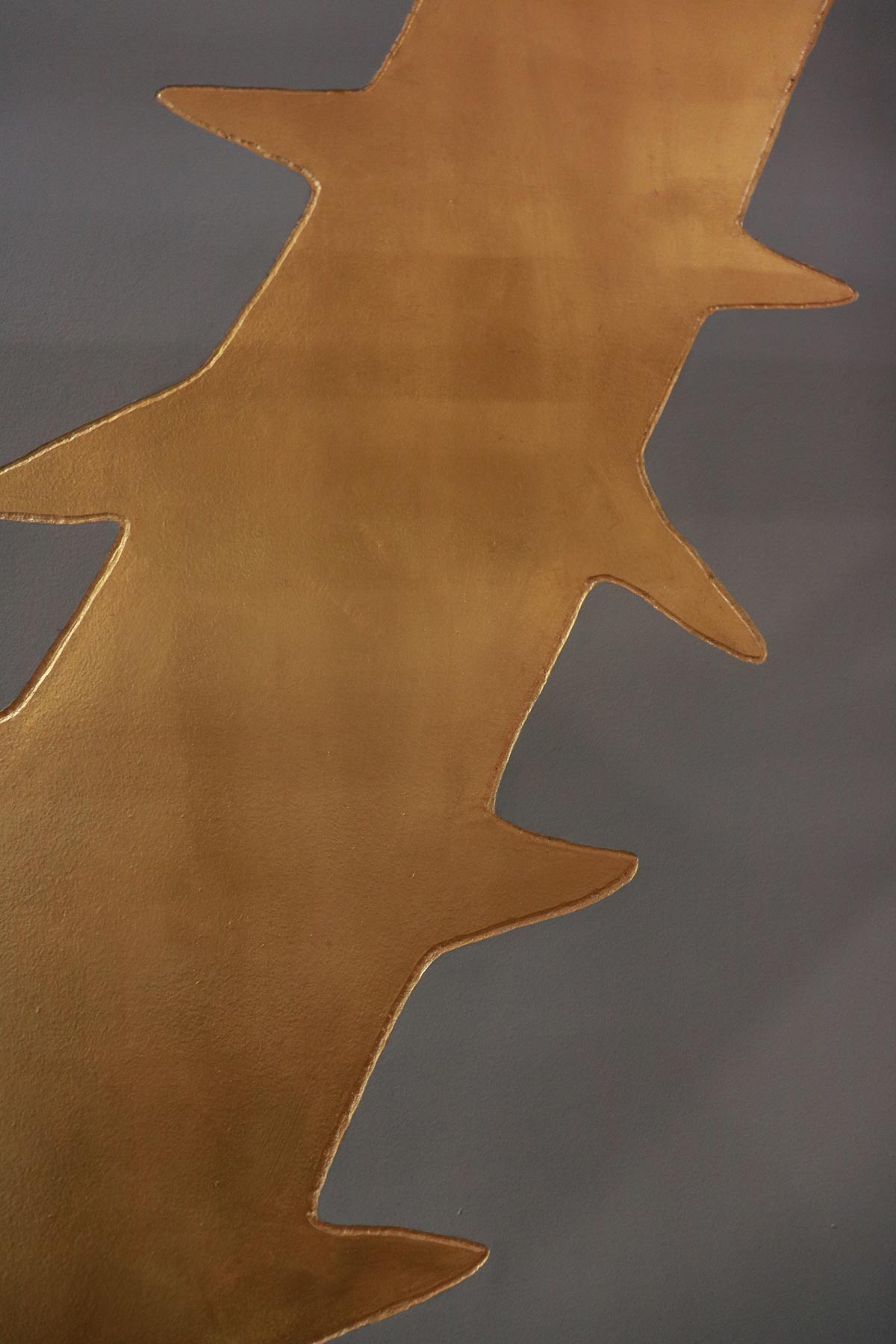
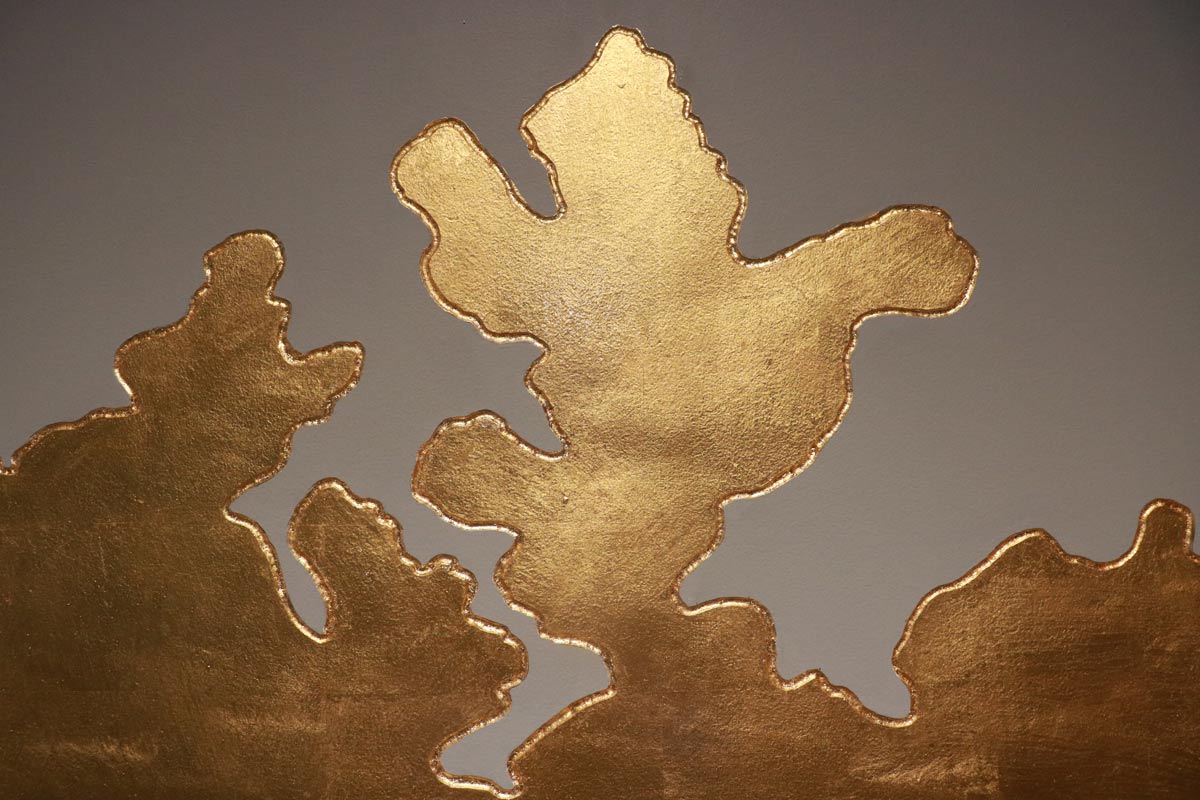
A wall work shows an enlarged drawing of this plant in the main staircase of the Bergmannkiez Community School. The approximately 300-meter-wide outer lines are engraved by the artist several millimeters deep into the concrete. The sustainably recycled gold leaf used is 100 nanometers – thinner than visible light (380 nm -750 nm). The material highlights the preciousness of biodiversity:
The artistic work critically questions ecocide, the destruction of natural global commons, which contemporary society must address. The Federal Environment Ministry has noted a drastic decline in many insect species in Germany: in some areas there are up to 80 percent fewer insects than 40 years ago. In 2023, the EU Commission approved glyphosate for another ten years. As a total herbicide, pesticides containing glyphosate destroy almost all wild plants. The resulting loss of food sources and habitats leads to a decline in biodiversity, such as pollinator species. The artwork turns “values” on their head through the enlargement and the material used: what is destroyed as “annoying weeds” or is given little attention is put in a new light. Why are wild carrots important? Is the use of pesticides “economical”? Where does our food come from?
Wilde Möhre calls to action: In a plant sculpture, the students can plant and watch wild carrots grow. The biochar concrete (charcrete) used serves as a „carbon sink“ through the sustainable technology Biochar Carbon Removal (BCR) by trapping CO2. The anthracite that is created in this way refers to the trick of the wild carrot: through the anthocyanin point – a dark flower in the middle of its white umbel – it attracts as a fake insect other insects. Andrena Argentata – On the side border you can read the names of endangered insects that use the wild carrot as a source of food. They sound like magic spells to the children. Which of them are extinct? Which can the students discover? The artistic work encourages the students to ask questions. In a short film, the children playfully explore and document the importance of the wild plants in their environment for the ecosystem.
 Eva Susanne Schmidhuber